Regulatory Sandbox Access for Payments Fintechs by Jurisdiction
Three distinct sandbox models share the same label—know which one your jurisdiction actually offers.

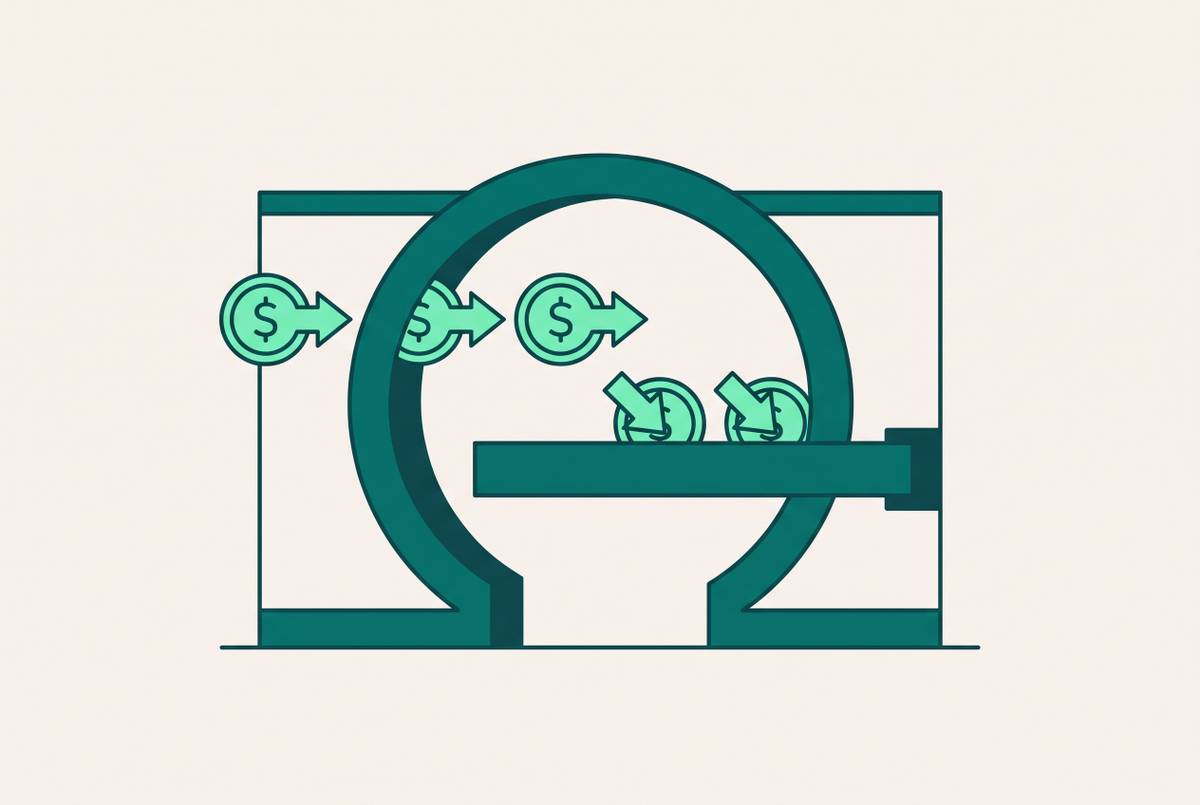
A founder who hears that a jurisdiction "has a sandbox" usually pictures one thing: a regulator agreeing to suspend some of its own rules so a new product can be tested on real customers. That picture is accurate in some countries and wrong in others, and the gap between the two has real cost for payments fintechs that file into the wrong regime expecting relief they were never going to get. Three structurally distinct models share the same label. One suspends or waives rules by law. One grants a time-limited authorization for a narrower scope of activity than a full license would allow. One is, in practical terms, an information exchange: the regulator watches closely, offers guidance, and holds the applicant to every rule that already existed. Only the first two change what a firm is actually allowed to do, and the question worth asking before any application is not whether a sandbox exists but whether it does that. Whichever model a jurisdiction runs, five obligations stay fixed everywhere: AML/CFT compliance, consumer protection, data privacy, cybersecurity, and fit-and-proper standards for management. No sandbox covered by current regulatory practice waives any of these, and firms that treat sandbox entry as a holiday from compliance misread what is on offer.
Structural factors that determine whether a sandbox delivers real relief or just supervision
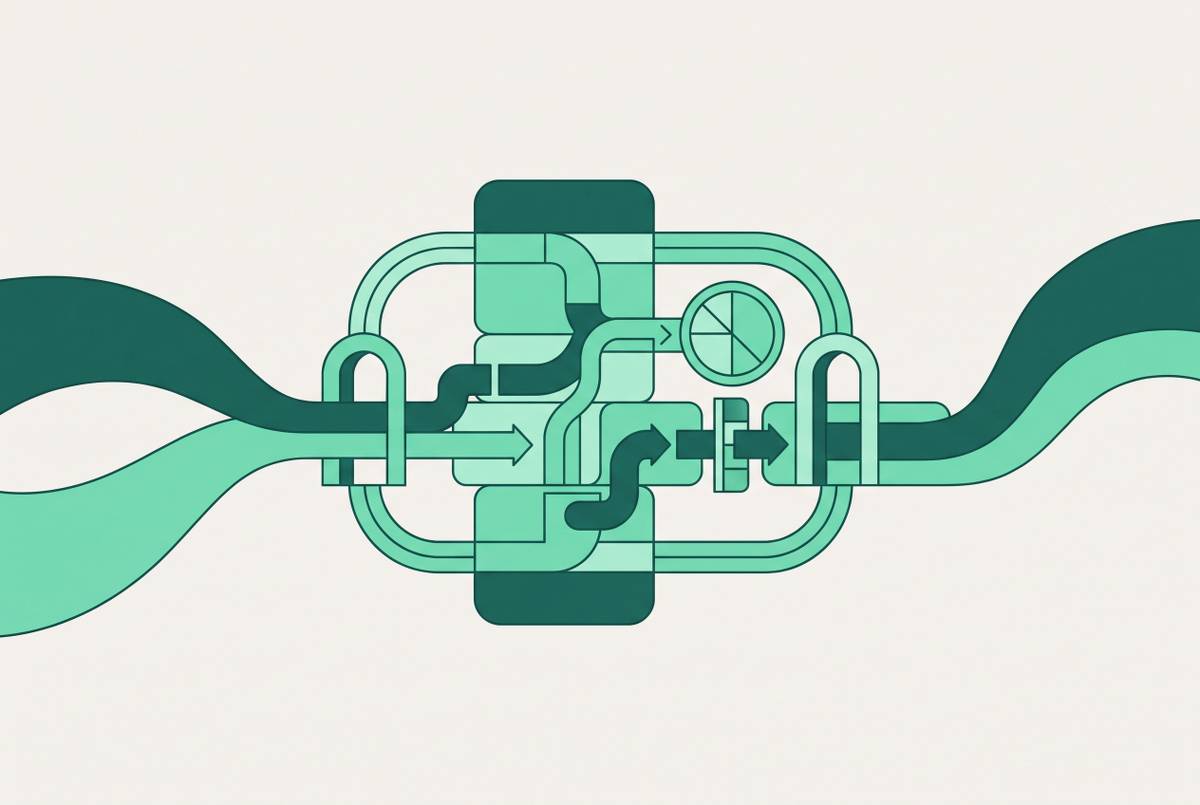
What a sandbox can offer is set before a firm ever applies, by two upstream variables that have nothing to do with how innovation-friendly a regulator claims to be. The first is legal authority. Where a regulator can grant waivers under powers it already holds, genuine rule-relaxation is possible without new legislation. Where lawmakers had to pass a statute before the sandbox could exist at all, the legal footing tends to be narrower, and so is the relief a firm can expect to receive once inside. The second variable is how coordination among regulators is structured, which matters once a payments product touches more than one regulatory domain, as most of them do. Analysis from the Oxford Business Law Blog identifies three coordination models in current use: a single entry point, where one lead regulator liaises with others on the applicant's behalf; separate entry points, where independent regulators each run their own program, as happens in India and Australia; and a joint regulatory committee, coordinated either through formal agreement or softer, non-binding cooperation. A single entry point works best for applicants when it is jointly administered rather than run by one regulator alone, which is the model the FCA and the Bank of England have built for the UK's Digital Securities Sandbox. That framework rests on a memorandum of understanding and an advisory panel that let the two regulators share information early and often, without either one giving up its own authority to decide. Separate entry points, by contrast, leave the firm to manage multiple bureaucratic processes in parallel, a burden that informal information-sharing between regulators, or a statutory duty to cooperate, can ease but rarely removes. These two variables, legal authority and coordination design, set the ceiling on what any jurisdiction's sandbox can deliver, and they are the lens worth applying to every market that follows.
UK: a mature framework where the sandbox and the prudential rulebook are currently moving in opposite directions
The UK built the first version of this instrument and still runs the most developed sandbox infrastructure anywhere in this comparison, but current events there show that even a mature framework carries its own structural limits. The FCA launched its regulatory sandbox in 2016, and that program became the template every later regime has borrowed from in some form. Its newest iteration, the Digital Securities Sandbox, is jointly run with the Bank of England under the coordination structure described above: an MoU, an advisory panel, and a process for escalating disagreements through each institution's own governance rather than letting them stall the applicant's test. Research from the Bank for International Settlements on the UK program found that sandbox entry lowers information asymmetries and regulatory costs for the firms that go through it, a reduction linked to an increase in first-time investors and in investors based outside the UK, both groups that would otherwise face a harder time assessing an early-stage financial product. But the framework's maturity does not mean its parts are currently pulling in the same direction. The FCA is actively testing firms building institutional stablecoin infrastructure inside the sandbox, at the same time that the Bank of England is proposing prudential rules that would constrain that same infrastructure from operating at the scale those firms are building toward. A firm that completes FCA testing successfully cannot assume that success will translate into unconstrained operation once the Bank of England's rules take their final form. What does carry forward reliably is a named supervisory contact at the FCA and a documented record of supervised testing, both of which feed directly into a full authorization application once the sandbox period ends.
Singapore: the widest documented scope of rule-relaxation, with two sandbox tiers that most guides conflate
The jurisdiction examined in this section offers the broadest formally documented scope of rule-relaxation among those covered here. MAS has stated it will consider relaxing asset maintenance requirements, fund solvency rules, capital adequacy requirements, board composition rules, and general financial soundness requirements for the duration of a sandbox test, a list that goes well beyond what most regulators are willing to put on paper. Singapore in fact runs three separate tiers: the standard sandbox, Sandbox Express, and Sandbox Plus. Most published guides describe only the first two, but for a firm entering the Singapore market for the first time, Sandbox Plus is usually the relevant door, and it is the one that gets left out most often. The framework has produced outcomes payments firms can point to directly. Paxos became the first company to receive full approval to issue stablecoins in Singapore, and StraitsX followed with its XSGD stablecoin, both having moved through the MAS sandbox process on the way to full authorization. The broader comparative research on sandbox performance attributes Singapore's results less to the generosity of its rules than to the maturity of the ecosystem around them: a structured framework paired with institutional capacity to run it produces stronger outcomes than an equally ambitious regime that lacks the apparatus to support it.
Gulf jurisdictions: restricted licensing as the dominant model, with ADGM and DIFC as the primary access points
Sandboxes in the Gulf mostly follow the second model described earlier: restricted licensing rather than statutory rule waiver. A firm that enters a Gulf sandbox is genuinely licensed to operate, but for a scope of activity narrower than a full license would permit, and that distinction matters because it changes what graduation out of the sandbox requires. Where a statutory waiver simply lapses at the end of a test period, a restricted license has to be upgraded into full authorization through its own separate process, and firms that treat the two as equivalent end up unprepared for the work that step takes. A second free zone is a parallel option, but it operates as its own jurisdiction with its own regulatory body and its own legal system, distinct from the first. That means a Gulf applicant is choosing between two separate free-zone regimes with their own rules and their own courts, not filing into a single national gateway the way an applicant would in the UK or Singapore. Because exiting a restricted license is a substantive step in its own right, firms considering either free zone are better served planning the post-sandbox authorization pathway before they file the initial application, not after.
South Korea and Rwanda: the clearest examples of genuine statutory waiver
South Korea and Rwanda stand out from the rest of this comparison because both rest on an actual statutory waiver rather than a regulator's discretionary willingness to accommodate a test. South Korea's program is described as the clearest instance of genuine legal relief in the countries this comparison covers, a waiver written into law rather than extended as a supervisory courtesy, and it was built as one piece of a coordinated national strategy to grow the country's fintech sector. The World Bank's global sandbox survey documents this directly, including a dedicated account of the legislative and regulatory changes that followed from South Korea's sandbox testing, changes that fed back into the law rather than stopping at the level of individual firms. Rwanda's sandbox gets far less attention internationally, but the legal footing underneath it is described as firmer than several far better-known regimes, which makes it worth a serious look for any firm weighing entry into African payments markets. That means the waiver itself has a stronger legal basis than Rwanda's broader ecosystem depth would suggest, which matters because a firm operating under a genuine statutory waiver can rely on that relief holding for the full test period rather than depending on continued regulatory goodwill. The World Bank report also notes that Rwanda ran a simulation exercise to test its own regulatory readiness before the full sandbox launched, a deliberate feasibility check few jurisdictions bother to document publicly.
Hungary and other developing-market sandboxes: where limited outreach and institutional capacity constrain access regardless of formal design
A sandbox's written rules and its real-world accessibility are not the same thing, and in developing markets the gap between the two can decide which firms get in. Hungary's sandbox is the clearest documented case: the comparative research on its program finds that limited public visibility and outreach restrict access in practice, and the firms most affected tend to be smaller, less well-connected fintech startups, which are often exactly the firms a sandbox is meant to protect. That framing is not a dismissal of Hungary's program. The research treats it as a genuine illustration of what sandboxes can offer in a developing market: the legal framework exists and the policy intent behind it is genuine, but the institutional capacity to run the program at scale and publicize it broadly has not caught up with the design on paper. Where the UK and Singapore benefit from mature ecosystems that give a sandbox somewhere to land, Hungary shows what happens when the same formal structure is built without that surrounding support already in place. For a firm evaluating any developing-market sandbox, the practical lesson is to look past the published rules and check the regulator's actual track record running previous cohorts, along with how clearly it has published its eligibility criteria, since those two things predict accessibility better than the statute does.
The United States: why there is no federal payments sandbox
The United States, the largest payments market in this comparison, has no federal fintech sandbox for payments companies, and that absence is itself a structural fact firms have to plan around rather than wait out. Several individual states run their own sandbox programs, but there is no national regime underneath them, and a firm cannot build a market-entry strategy around a federal framework that does not exist. Payments firms must navigate this patchwork of state-level rules state by state, a burden that has pushed many of them toward partnerships with chartered banks or toward pursuing a national bank charter directly, both of which substitute for the regulatory certainty a federal sandbox would otherwise provide. A separate development may eventually reshape this picture: an executive order has directed the Federal Reserve to conduct a full review of how non-bank financial companies, including those working in digital assets, gain access to Federal Reserve payment accounts and services, and the Federal Reserve has since proposed changes to its Payment System Risk policy and its account access guidelines to allow for new special-purpose "Payment Accounts." That proposal does not expand which entities are legally eligible for Reserve Bank accounts, so it addresses account access mechanics rather than creating anything resembling the sandbox frameworks running in the UK, Singapore, or the Gulf. Until that changes, payments fintechs targeting the US market are working within a system built from bank partnerships and charters.
Sources
- Regulatory Cooperation in AI Sandboxes: Insights from Fintech
- The Role of Regulatory Sandboxes in FinTech Innovation: A Comparative Case Study of the UK, Singapore, and Hungary
- FinTech Regulatory Sandboxes: A Country-by-Country Guide
- Global Experiences from Regulatory Sandboxes FINANCE, COMPETITIVENESS
- Regulatory sandboxes and fintech funding: evidence from ...
- Federal Reserve Access for Fintechs: Executive Order and Federal Reserve Payment Account Proposal Signal Potential New Era for Fintech Payment Access